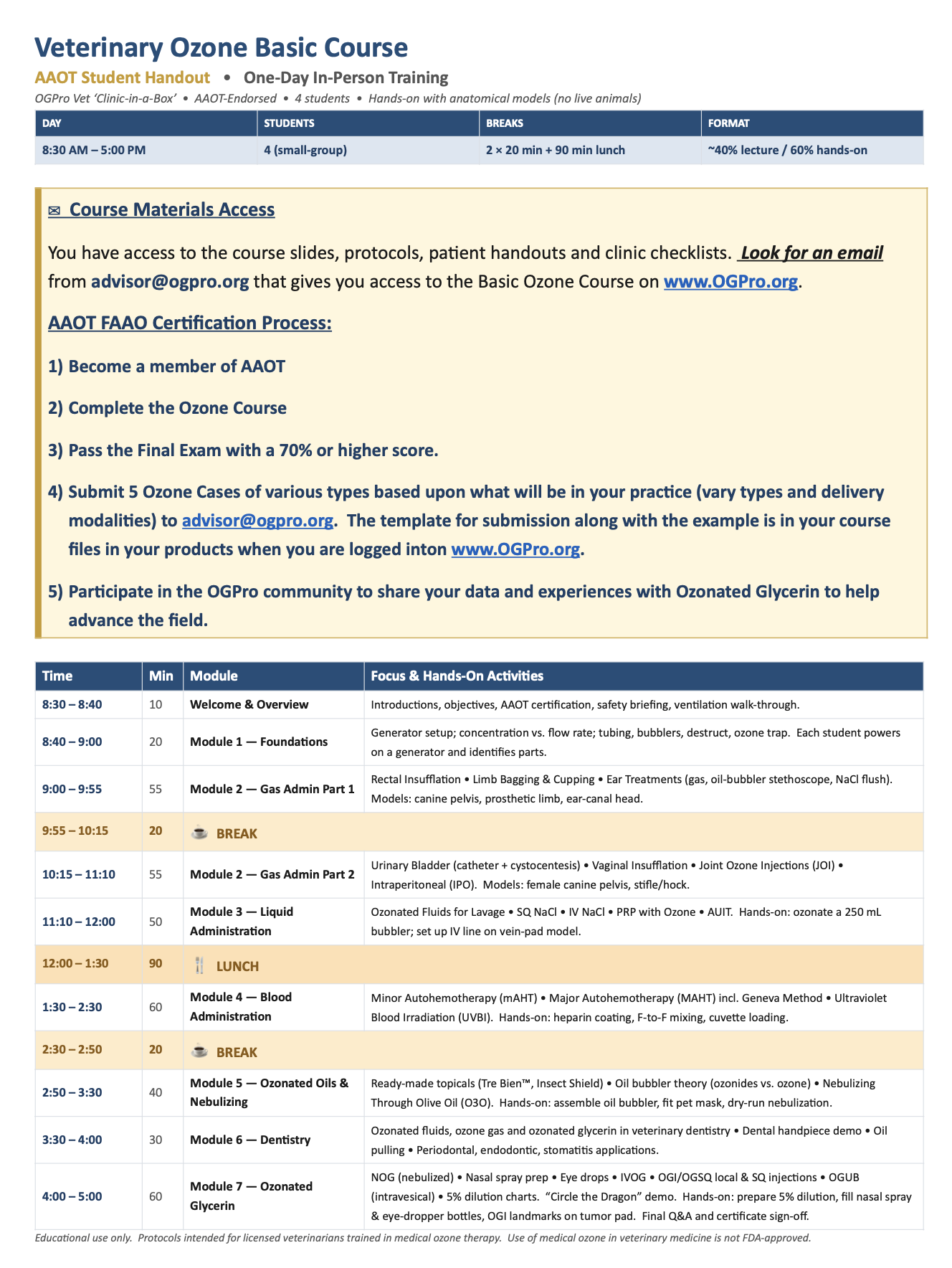
50 questions, 70% to pass (35 of 50)
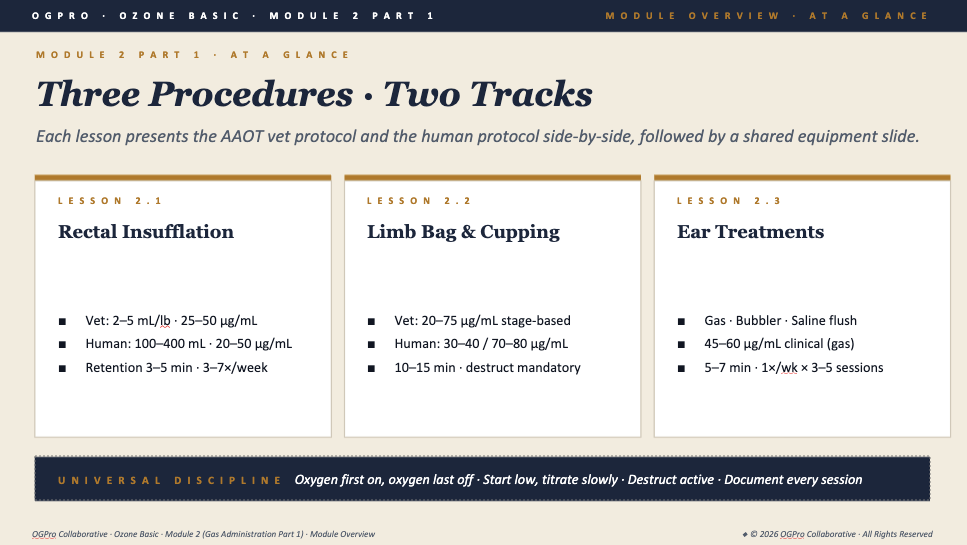
Module 2 covers the seven gas-administration routes in the AAOT/OGPro protocol library, split across two parts. Part 1 — this module — covers the three procedures that do not require aseptic technique: rectal insufflation, limb bagging and cupping, and ear treatments. Part 2 covers the four aseptic gas routes (bladder, vaginal, joint, intraperitoneal).
Each lesson presents the veterinary protocol Module 2 covers the seven gas-administration routes split across two parts. Part 1 — this module — covers the three procedures that do not require aseptic technique: rectal insufflation, limb bagging and cupping, and ear treatments. Part 2 covers the four aseptic gas routes (bladder, vaginal, joint, intraperitoneal).
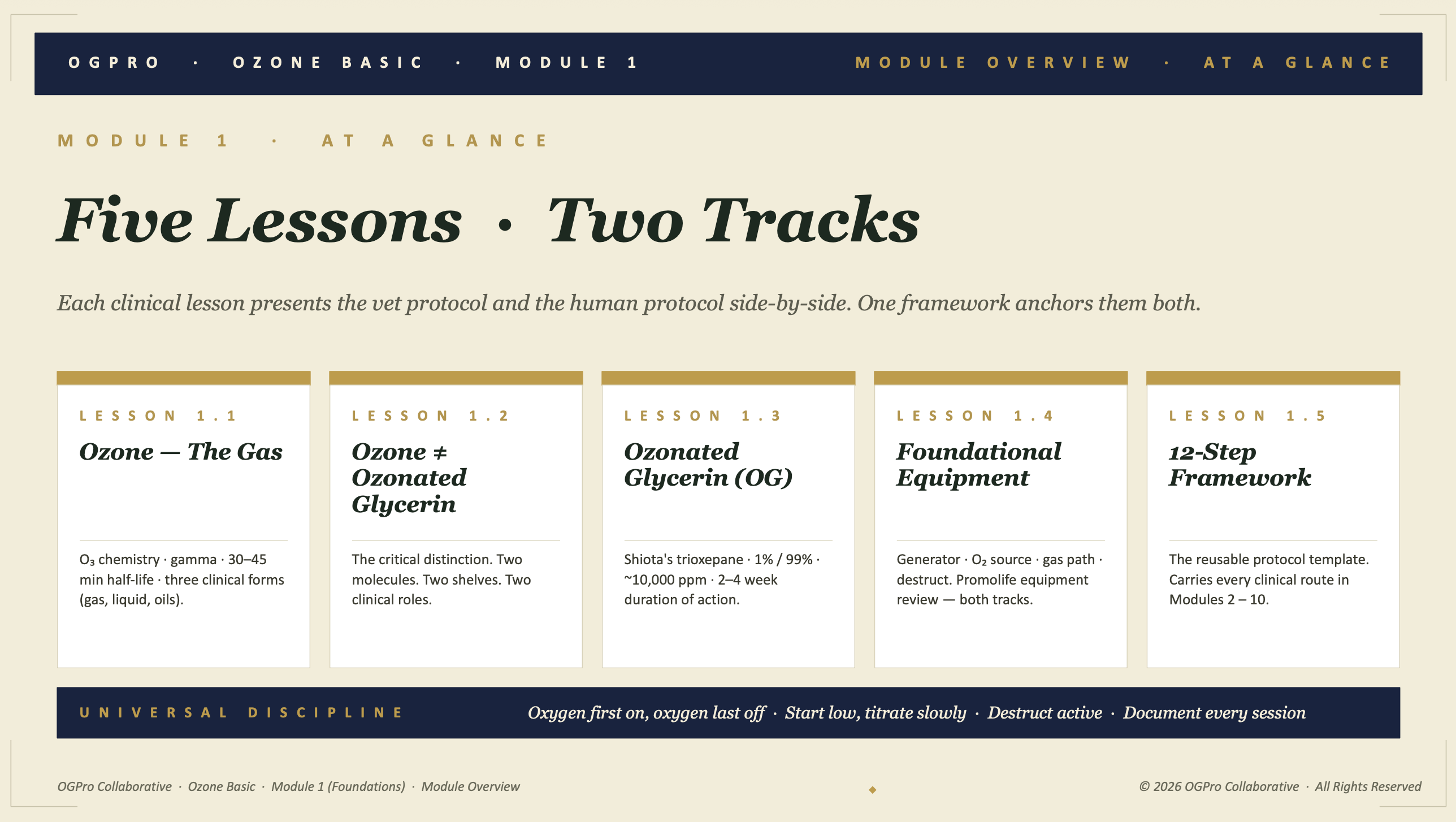
Each lesson presents the veterinary protocol and the human protocol side by side, followed by paired equipment specifications. The 12-step protocol framework introduced in Module 1 carries every route in this module and every clinical module that follows.
Learning objectives
For each of the three gas-administration routes, recite the species-appropriate volume, concentration, frequency, and treatment duration.
Identify the absolute and relative contraindications that apply to each route in either species.
Assemble the required equipment kit for each route in either track.
Execute the route from oxygen-on through documentation, observing the universal gas-administration disciplines.
Recognize and respond to common in-session events and post-session reactions.
Decide, for the ear lesson, between direct gas, oil-bubbler vapor, and ozonated saline flush based on indication, tolerance, and tympanic-membrane status.
Universal disciplines for gas administration
Oxygen FIRST on, oxygen LAST off. The oxygen source is turned on before the ozone generator and turned off after the generator. Reversing this sequence allows ozone to fill stagnant tubing.
Start low, titrate slowly. Begin at the low end of the dose range for the indication. Advance per tolerance and clinical response across sessions, not within a session.
Destruct active at all times. Every gas route routes residual ozone through a destruct system. Ozone is never vented to room air, and the destruct is verified operational before each session.
Document every session. Volume, concentration, route, generator lot or serial number, patient tolerance, and clinical response. Documentation is the single most important step in protecting the patient, the practitioner, and the credibility of the modality.
Ozone-contact path: polypropylene, glass, silicone, PTFE, HDPE only. No metal, no latex, no rubber in the gas path. Ozone oxidizes incompatible materials within minutes
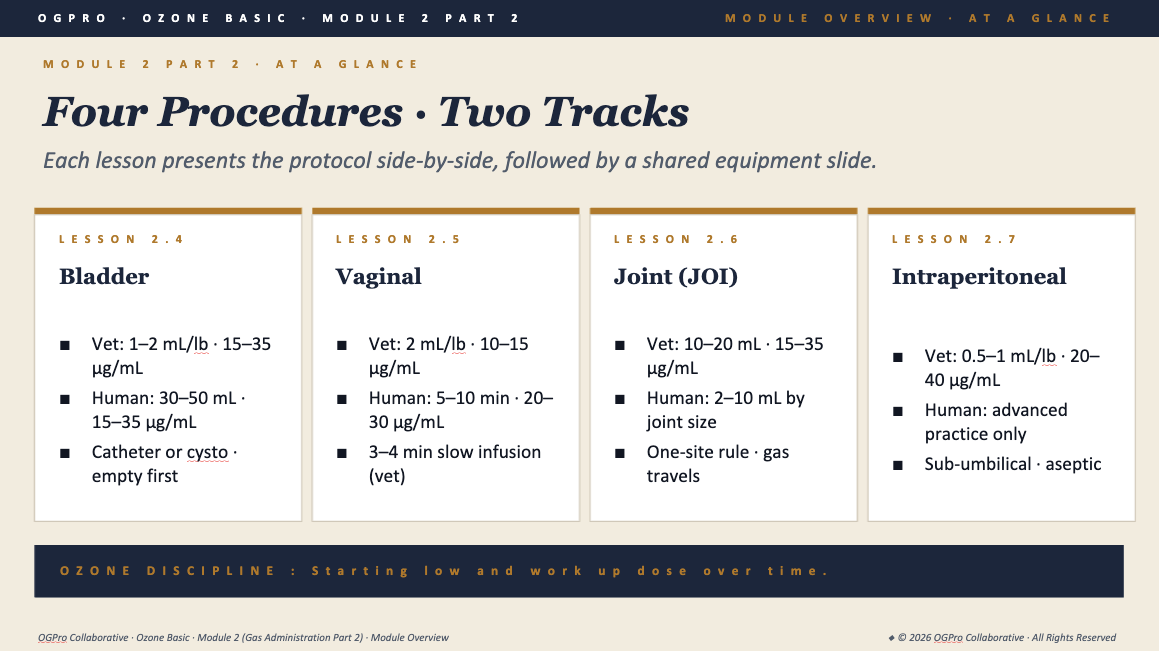
Module 2 Part 2 covers the four gas-administration routes that cross a sterile barrier: urinary bladder insufflation, vaginal insufflation, joint ozone injections (JOI), and intraperitoneal ozone (IPO). Where Part 1 routes interface with mucosa or external skin, every Part 2 route delivers ozone across a sterile field into a normally sterile body compartment. Maintain aseptic technique.
Learning objectives
For each of the four aseptic gas routes, recite the species-appropriate volume, concentration, frequency, and treatment duration.
Identify the absolute and relative contraindications that apply to each route in either species, including the human-IPO advanced-practice gate.
Assemble the required aseptic equipment kit for each route in either track.
Execute each route with a sterile field, single-site discipline, and the gas-administration safety stack from Part 1.
Recognize and respond to common in-session and post-session events specific to each route.
Apply the single-site rule for joint injections and explain why multiple insertion points cause gas leakage.
Distinguish vet vaginal insufflation (urinary catheter through urethra into vagina) from human vaginal insufflation (direct vaginal probe), and explain the anatomic basis.
Aseptic discipline — the Part 2 baseline
Every route in this module crosses a normally sterile barrier. The five universal gas-administration disciplines from Part 1 (oxygen first on / last off, start low and titrate slowly, destruct active, document every session, compatible materials only) all still apply. Part 2 adds four aseptic requirements that overlay the universal stack:
Clean site.
Sterile single-use catheters and needles. Reuse of catheters and needles between patients is prohibited.
Single-site rule for joint and IPO routes.
Sedation at practitioner discretion for . Patient cooperation drives the choice; female cats and small dogs may need sedation for catheterization, and intra-articular work is typically sedated in veterinary patients.
Module Overview
Module 3 is the first liquid-administration module in the Ozone Basic curriculum. Where Module 2 covered seven gas routes that move ozone directly into tissue or body cavity, Module 3 dissolves ozone into a liquid carrier and delivers that carrier by lavage, drink, subcutaneous injection, intravenous infusion, joint injection, or intramuscular immunomodulation. The chemistry of ozone is the same. The carrier changes, and with it the time-pressure of the procedure.
Saturated ozonated saline holds 25–37 µg/mL of ozone regardless of how high the bubbler gas dial is set. Half-life in plastic is approximately 30 minutes; in colored glass approximately 45 minutes. Every liquid procedure in this module is therefore a prep-and-deliver discipline: ozonate immediately before use, prepare the smallest practical volume, and deliver while the carrier is fresh. The Module 2 aseptic-discipline overlay carries forward unchanged for any route that crosses a sterile barrier.
Five lessons follow a single twelve-step framework. Each lesson opens with a vet and human protocol side-by-side, then steps through indications, contraindications, equipment, patient or owner education, pre-procedure management, preparation, administration with parameter table and numbered technique sequence, post-procedure management, documentation, follow-up schedule, troubleshooting, and reporting back to the OGPro Practice Database. The framework is the spine. Across five very different physical routes, the same twelve checks anchor every clinical decision.
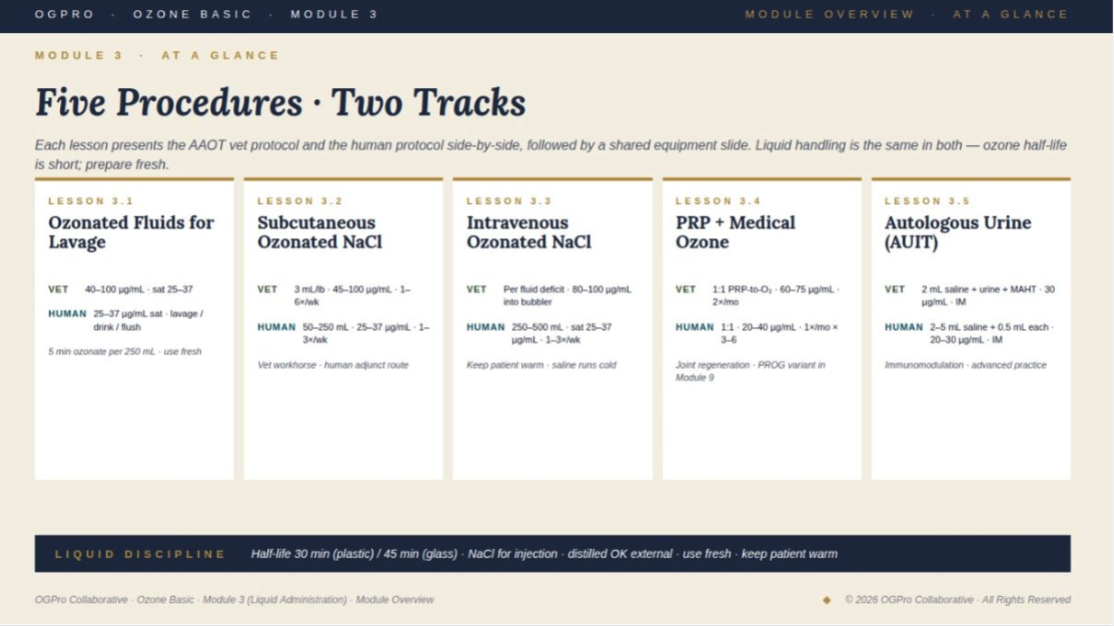
The five liquid routes
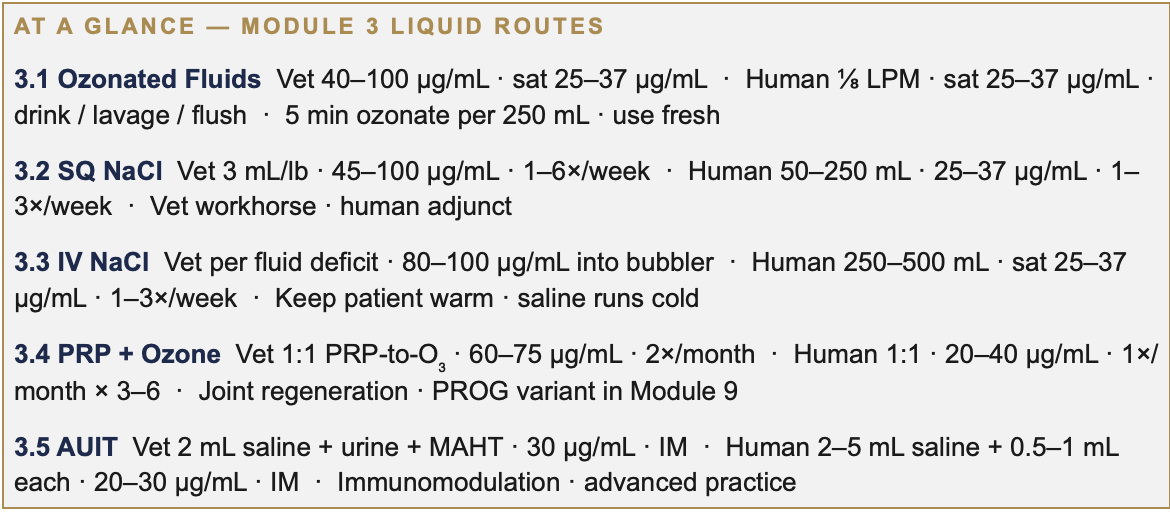
Lesson 3.1 — Ozonated Fluids for Lavage / Drink / Flush. External lavage, internal cavity flush, oral consumption. NaCl for internal and injectable use, distilled water acceptable for external use only.
Lesson 3.2 — Subcutaneous Ozonated NaCl (SQ NaCl). Vet workhorse for dehydration, immune loading, and oncology adjunct. Adjunct local-effect and hydration support route in humans.
Lesson 3.3 — Intravenous Ozonated NaCl (IV NaCl). Systemic route for sepsis, shock, severe infectious disease, and chronic-infection or oncology support in humans.
Lesson 3.4 — PRP + Medical Ozone (Regenerative Joint Injection). Platelet-rich plasma combined one-to-one with ozone gas. Joint, tendon, and degenerative pain in both species. PROG variant cross-referenced to Module 9.
Lesson 3.5 — Autologous Urine Immunotherapy (AUIT). Ozonated saline plus the patient's own urine and blood, succussed and reintroduced intramuscularly. Acts as a homeopathic isode.
The liquid-discipline overlay
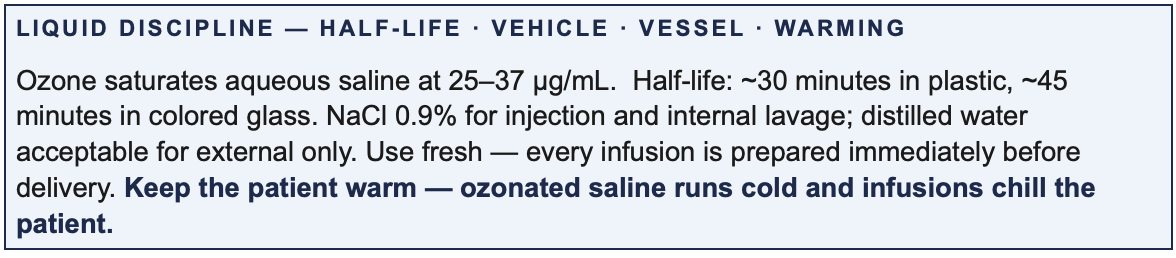
Half-life — ozonated saline loses approximately half its potency every 30 minutes in plastic, every 45 minutes in glass. Prepare fresh and deliver immediately.
Vehicle — NaCl 0.9% in glass IV bottle for any internal or injectable application. Distilled water is acceptable for external lavage only. Lactated Ringer's is contraindicated (precipitates on glass walls). Spring or mineral water is contraindicated for drinking applications (interferes with ozone).
Vessel — colored-glass storage jar with an ozone-resistant cap for prepared fluid. Plastic IV bags shorten half-life and are unsuitable for IV ozone delivery.
Saturation cap — saturation tops out at 25–37 µg/mL of dissolved ozone regardless of generator concentration. Higher dial settings do not produce higher delivered concentration; they shorten ozonation time to reach saturation.
Warming — patient warming is part of the procedure for every infusion route. Ozonated saline is cold, and adult patients chill during gravity-feed infusions; a heating blanket and warmed-line bath are equipment, not comfort items.
Learning objectives
By the end of this module, the practitioner will be able to:
Select the appropriate liquid route for a given clinical indication in both veterinary and human patients.
Prepare ozonated saline correctly — generator settings, ozonation time, vehicle and vessel selection.
Deliver each of the five liquid routes following the route-specific aseptic and warming discipline.
Identify route-specific contraindications and dose-modify for cardiac, renal, oncologic, and pediatric or geriatric patients.
Document and follow up appropriately, including triage of adverse events and referral when needed.
Submit clinical experience back to the OGPro Practice Database to refine the protocols for the community.
Module Overview
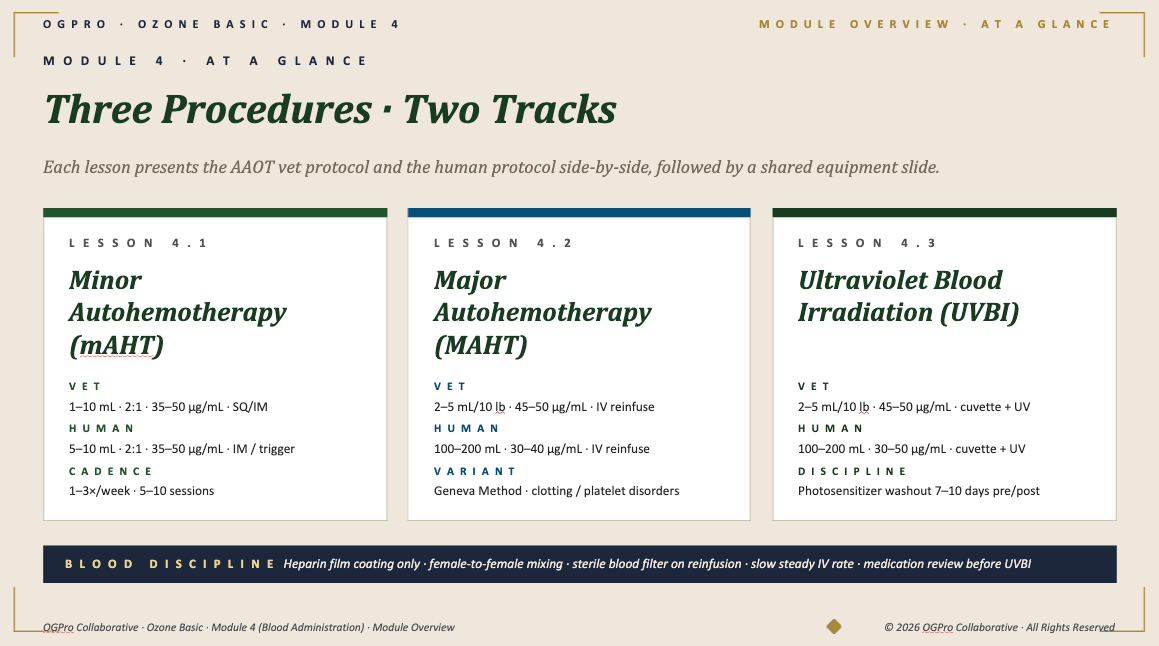
Three lessons cover the autohemotherapy ladder. Minor Autohemotherapy (mAHT) draws a small volume (1–10 mL vet; 2–5 mL human), mixes with ozone at moderate concentration, and reinjects SQ or IM — most often into a trigger point or acupuncture site. Major Autohemotherapy (MAHT) draws a larger volume (scaled to body weight in vet; 100–200 mL in human), mixes with ozonated saline and ozone gas in a sealed system, and reinfuses IV via butterfly or peripheral IV. The Geneva Method is a no-anticoagulant MAHT variant for patients with clotting or platelet disorders. Ultraviolet Blood Irradiation (UVBI) takes the MAHT preparation, runs it through a quartz cuvette under UV-A, UV-C, and visible-spectrum light, and reinfuses the photobiomodulated mix.
The three blood routes
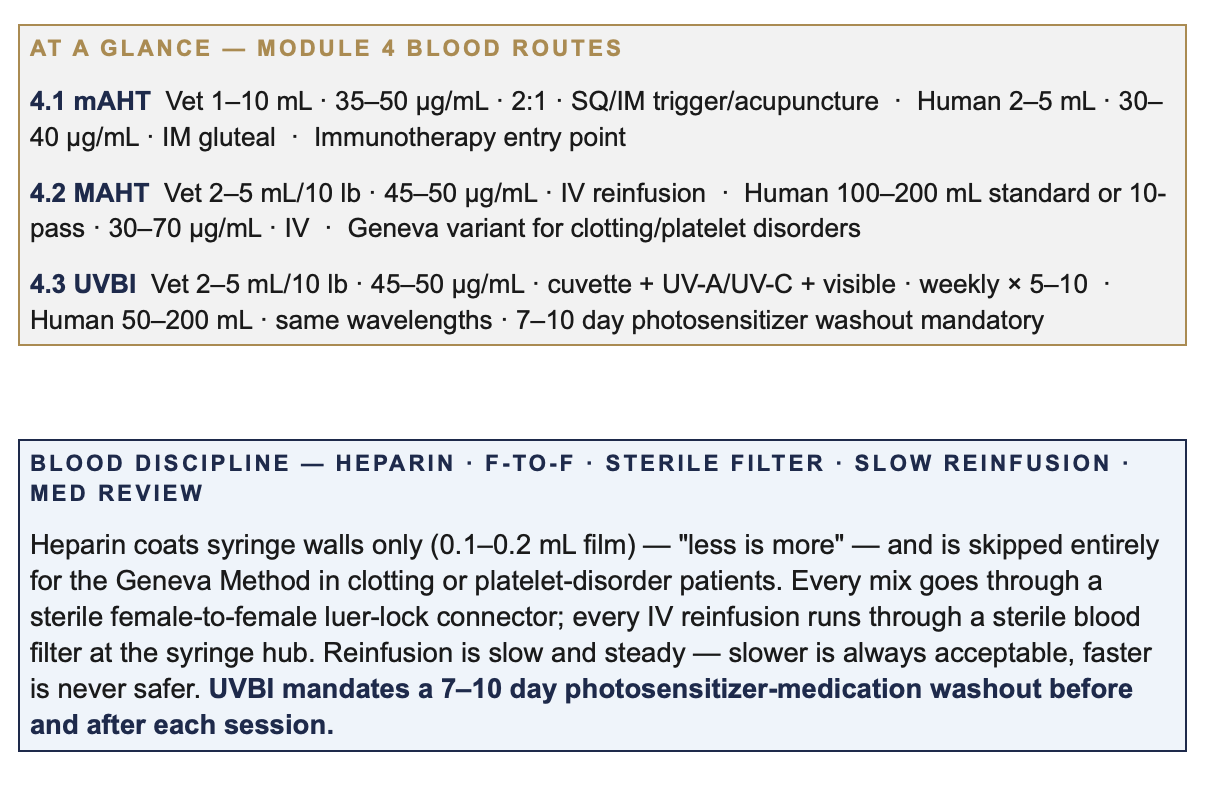
Lesson 4.1 — Minor Autohemotherapy (mAHT). Small draw, ozonate, reinject SQ or IM at trigger or acupuncture points. Vet 1–10 mL at 35–50 µg/mL; human 2–5 mL at 30–40 µg/mL. Same 2:1 ozone-to-blood ratio in both species.
Lesson 4.2 — Major Autohemotherapy (MAHT). Larger volume, full mix with ozonated saline and ozone gas, IV reinfusion. Vet 2–5 mL/10 lb; human 100–200 mL standard or 10-pass per Frankfurt protocol. Geneva Method covers patients with clotting or platelet disorders.
Lesson 4.3 — Ultraviolet Blood Irradiation (UVBI). MAHT prep run through a quartz cuvette under UV-A, UV-C, and visible-spectrum light. Photobiomodulation layered on top of MAHT. Mandatory 7–10 day photosensitizer washout before and after each session.
The blood-discipline overlay
Module 3's liquid discipline (vehicle, vessel, warming, use-it-fresh) and Module 2's aseptic discipline both carry forward intact. Module 4 adds a blood-handling layer on top:
Heparin coating — when heparin is used, it coats the syringe wall only (0.1–0.2 mL aspirated and expelled; the film on the wall is the active dose). "Less is more" — over-heparinization changes the reinfusion safety profile and can complicate the ozone-blood mix. The Geneva Method is the no-heparin variant for patients with clotting or platelet disorders.
Female-to-female mixing — every blood-ozone mix uses a sterile F-to-F luer-lock connector to bridge the heparinized blood syringe and the ozone-gas syringe. Gentle rocking or succussion (30 seconds, 5–6 oscillations) homogenizes the mix without lysing red cells.
Sterile blood filter — every IV reinfusion runs through a sterile blood filter at the syringe hub. The filter catches any micro-clot, fibrin strand, or particulate that formed during processing. Filter use is non-negotiable for MAHT and UVBI.
Slow, steady reinfusion — IV reinfusion is delivered slowly and steadily until the prepared volume is gone. There is no "push" speed in this module. Slower is always acceptable; faster is never safer.
Medication review (UVBI) — every UVBI patient is screened for photosensitizing medications at least 7–10 days before the first session, with a matching washout for at least 7 days after the last session. The review is mandatory; the patient list of agents to discontinue is in Lesson 4.3.
Learning objectives
By the end of this module, the practitioner will be able to:
Select the appropriate autohemotherapy route (mAHT, MAHT, UVBI, or Geneva variant) for a given clinical indication in both veterinary and human patients.
Prepare the heparin-coated syringe correctly and recognize the patient profiles that require the Geneva Method instead of heparinized handling.
Execute the female-to-female mix, the sterile-blood-filter reinfusion, and the slow-steady IV delivery that are shared across all three lessons.
Conduct the UVBI medication review and enforce the 7–10 day photosensitizer washout before and after each UVBI session.
Identify route-specific contraindications and adjust for cardiac, renal, oncologic, immunosuppressed, and clotting-disordered patients.
Document and follow up appropriately, including triage of adverse events and referral when needed.
Submit clinical experience back to the OGPro Practice Database to refine the protocols for the community.
Module Overview
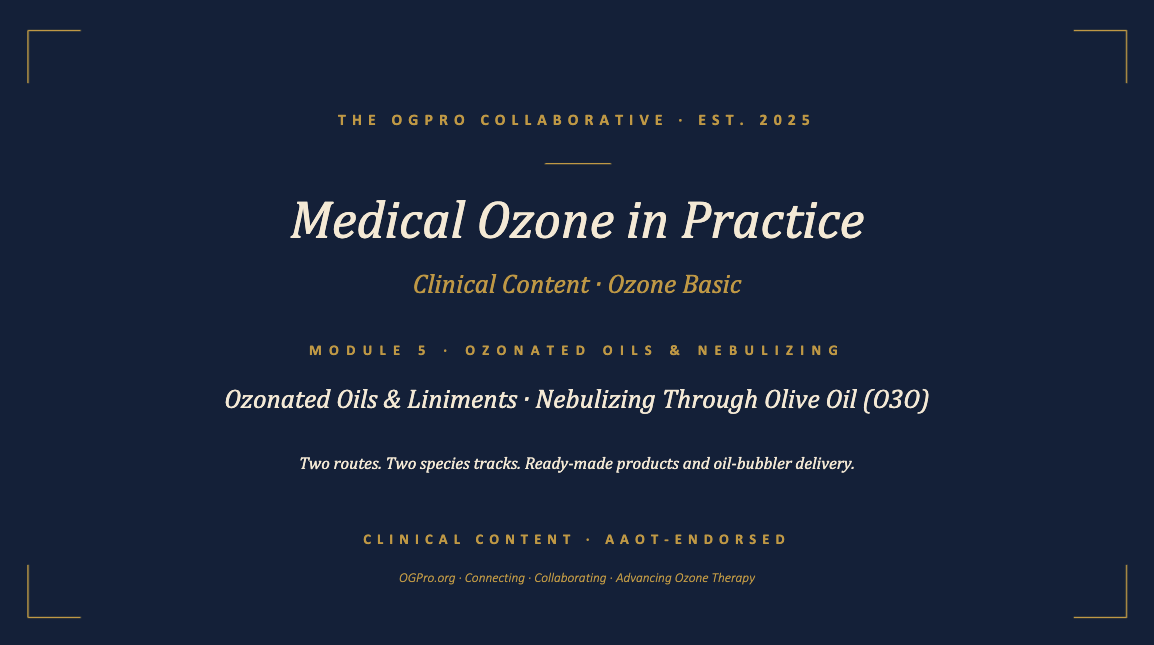
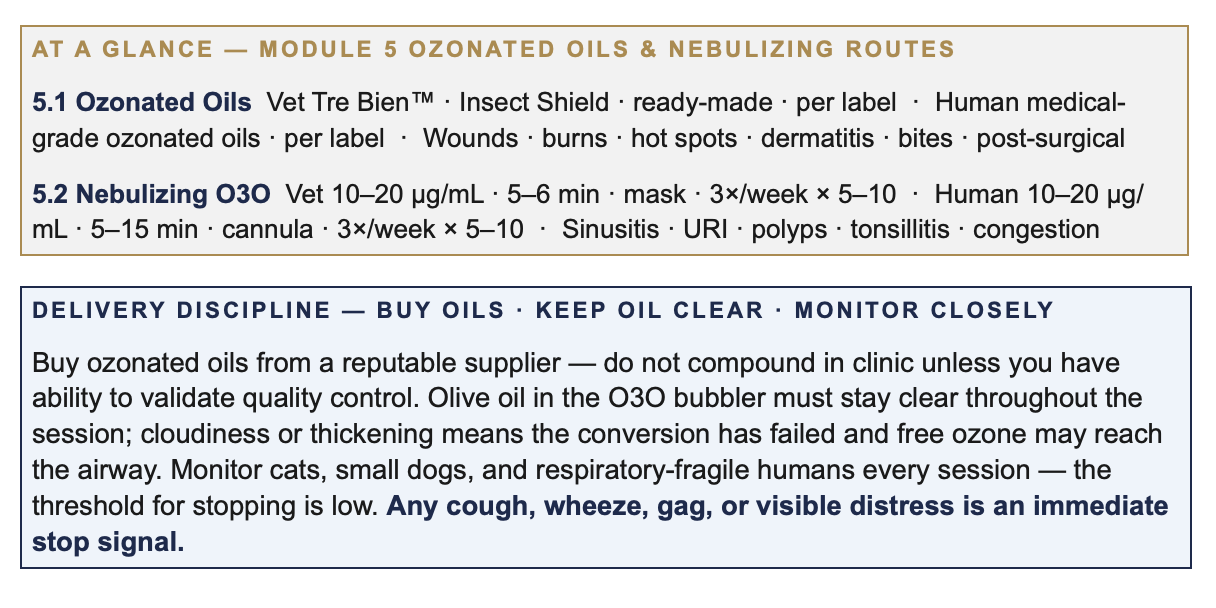
The chemistry shift is the core conceptual point of this module. Ozonated oils carry the ozone payload as ozonides — stable, shelf-life-compatible derivatives that form when ozone reacts with the double bonds of unsaturated fatty acids in the carrier oil. Ozonides are the medicinal molecule in topical ozone therapy; they are not free ozone. The same chemistry runs inside the O3O bubbler in real time: when ozone gas bubbles through a clear olive-oil column, the gas reacts with the oil's double bonds and produces ozonides in situ. The patient breathes oil-saturated, ozonide-loaded air — not raw ozone. This is the safety mechanism that makes respiratory ozone delivery possible at all.
Two lessons follow the same twelve-step framework that has anchored every clinical module in the course. Lesson 5.1 covers topical ozonated oils and liniments — purchase ready-made from a reputable supplier, follow label directions, layer the topical alongside any concurrent gas or liquid route. Lesson 5.2 covers O3O nebulizing — fill a clean olive-oil bubbler, route ozone through at 10–20 µg/mL, deliver via mask (vet) or cannula (human), 5–6 minute sessions for vet and 5–15 minutes for human, three times per week for the standard course.
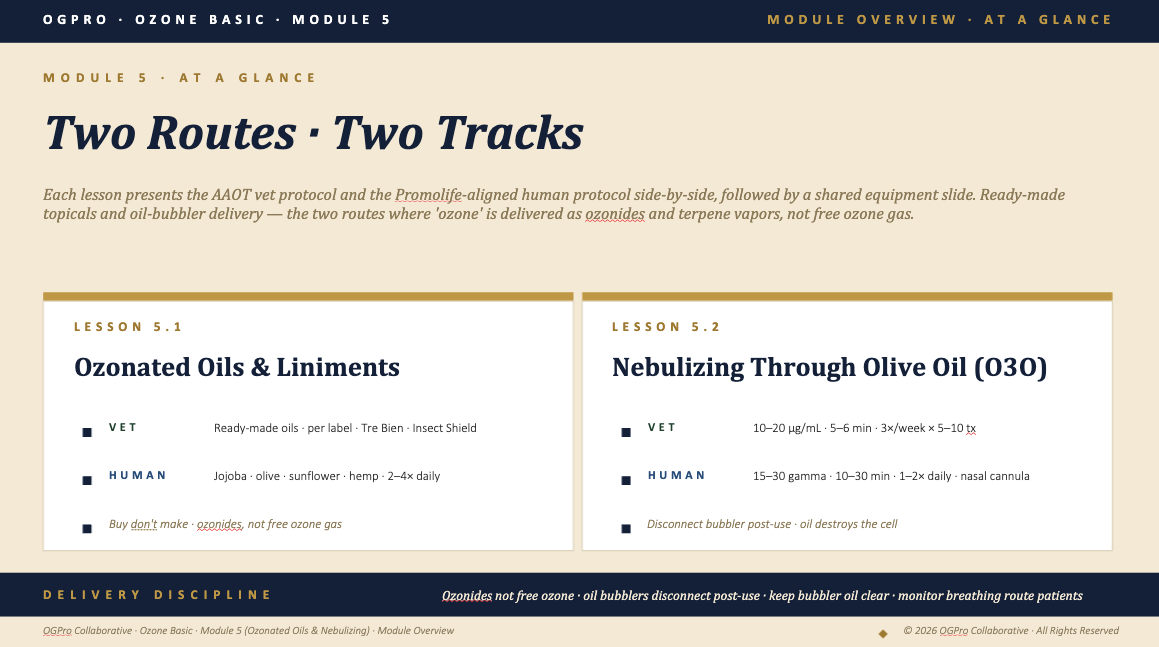
Lesson 5.1 — Ozonated Oils & Liniments. Ready-made topical products applied per label directions. Vet: Tre Bien™ Ozone Oil, Ozone Insect Shield, and equivalent products from reputable ozone suppliers. Human: medical-grade ozonated olive, sunflower, or jojoba oils from comparable suppliers. Indications include wounds, burns, hot spots, dermatitis, insect bites, dental rinse adjunct, post-surgical skin care.
Lesson 5.2 — Nebulizing Through Olive Oil (O3O). Medical ozone routed through a clear olive-oil column in a bubbler, delivered to the patient via mask (vet) or nasal cannula (human). 10–20 µg/mL ozone gas; 5–6 minute sessions for vet, 5–15 minutes for human; 3× per week for the standard course, daily for chronic or serious infections. Upper-respiratory indications: sinusitis, upper-respiratory infections, polyps and masses, parasites, tonsillitis, localized congestion.
Learning objectives
By the end of this module, the practitioner will be able to:
Select an appropriate ozonated topical product from a reputable supplier and apply it per its label directions across the named indications.
Assemble the O3O bubbler-and-mask (vet) or bubbler-and-cannula (human) path correctly and route medical ozone at 10–20 µg/mL through a clear olive-oil column.
Recognize the clarity check (clear vs. cloudy or thickened oil) as the gating safety check before every O3O session.
Identify route-specific contraindications and adjust session duration for cats, small dogs, and respiratory-fragile human patients.
Document and follow up appropriately, including triage of adverse respiratory events and topical reactions.
Submit clinical experience back to the OGPro Practice Database to refine the protocols for the community.
Module Overview
Module 6 is the dental module of the Ozone Basic course. Three substances — medical ozone gas, ozonated water, and ozonated glycerin (OG) — converge in one dental operatory and cover the full range of routine dental work: prophylaxis, periodontal disease, post-extraction healing, sinus management, and owner-led or patient-led home care. Five lessons walk the practitioner through each modality, an in-depth treatment of OG's four dental applications, the oil-pulling home adjunct, and a clinical anchor case (Basil) that demonstrates the mechanism in action.
The chemistry of the three substances was introduced in Module 1 and has been used throughout the course. Ozone gas is short-lived and generated on-site, used within minutes; ozonated water is the high-volume lavage carrier with a 30-minute half-life; ozonated glycerin is the shelf-stable trioxepane molecule with weeks of duration of action in tissue. In the dental operatory the three roles separate cleanly: water for lavage, gas for direct site treatment, OG for residual contact and home rinse. Together they cover from prophy to post-extraction in vet patients and from periodontal cleaning to surgical extraction support in human patients.
The five lessons
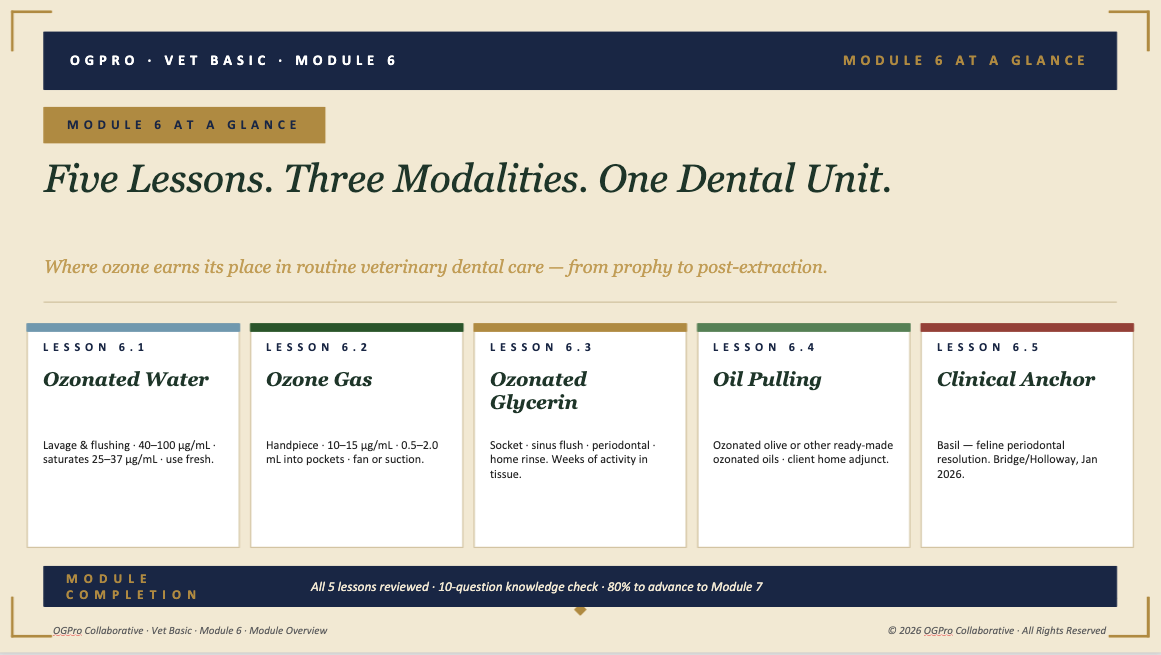
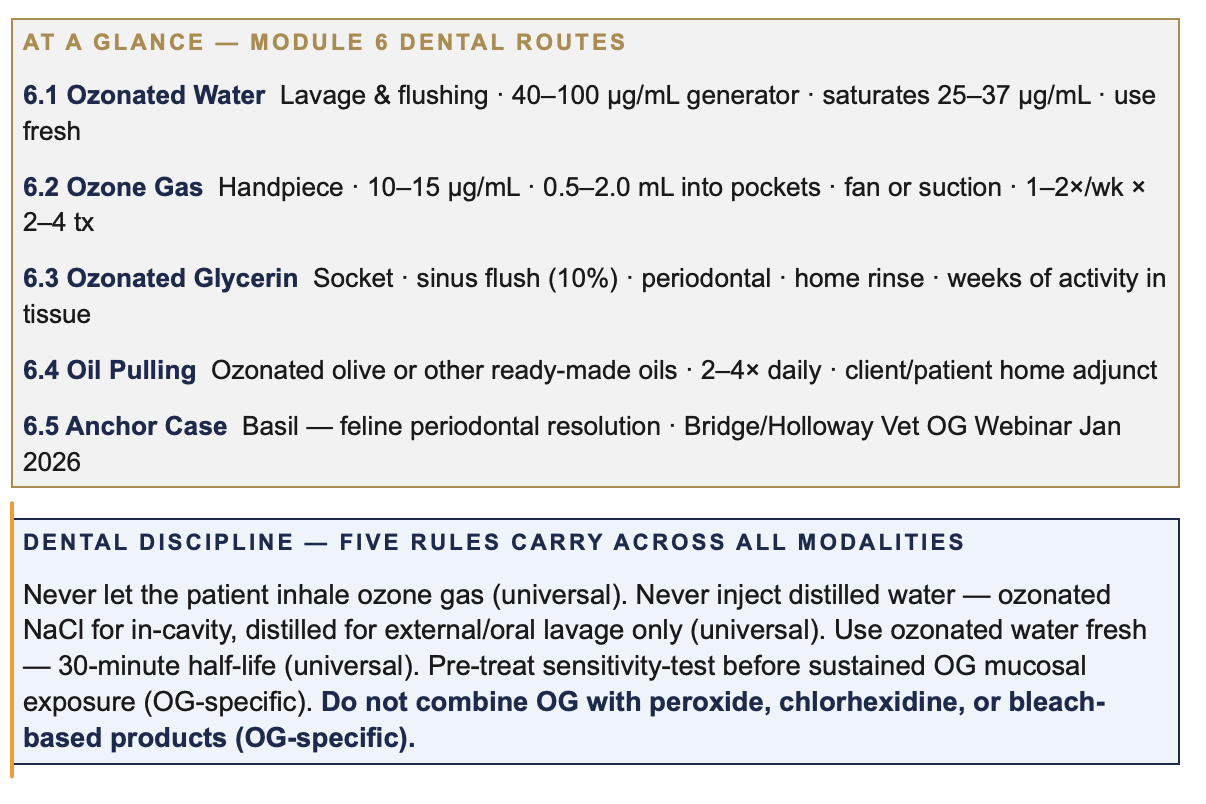
Lesson 6.1 — Ozonated Water in Dental. Lavage, soak, flush. 40–100 µg/mL generator setting; saturates at 25–37 µg/mL regardless of dial. Use fresh — half-life is approximately 30 minutes. Periodontal pocket irrigation, pre- and intra-operative oral lavage, stomatitis flushing, post-extraction rinsing, ice-cube application for abscess pain.
Lesson 6.2 — Ozone Gas in Dental. Targeted small-volume gas via dental handpiece. 10–15 µg/mL; 0.5–2.0 mL per site; 1–2× per week × 2–4 treatments. Dental infections, root canal disinfection, periodontal pockets, post-extraction sites. Fan or suction mandatory — never let the patient inhale ambient ozone.
Lesson 6.3 — Ozonated Glycerin in Dental. Four applications: socket infusion (full-strength, fills cavity, rapid hemostasis); sinus flush (10% in saline, 5–10 mL/side dogs, 2–5 mL/side cats); periodontal application (full-strength via cotton-tip, 0.2–0.5 mL via cannula into pockets); home halitosis rinse (full-strength, 2–3 mL daily, 30-day course). Showa University evidence lineage.
Lesson 6.4 — Oil Pulling. Ozonated olive or other ready-made ozonated oils applied along the gumline. Owner-driven (vet) or patient-driven (human) between in-clinic visits. Buy oils, do not make them. Augments — does not replace — the in-clinic protocols.
Lesson 6.5 — Clinical Anchor: Basil. Feline severe periodontal abscess resolution through topical OG flushing. Standard-of-care would have been surgical extraction; reverse-periodontitis observation with measurable pocket-depth reduction, gingival color shift, and resolution of bleed-on-probing. Bridge / Holloway Veterinary OG Webinar, January 2026.
The dental-discipline overlay
Modules 1 through 5 have established a discipline stack — aseptic technique (Module 2), liquid handling (Module 3), blood handling (Module 4), oils and inhaled delivery (Module 5). Module 6 carries them all forward and adds five dental-specific points:
Never let the patient inhale ozone gas. Use a fan or small vacuum to evacuate ambient gas during handpiece work. Even intubated animals can absorb ozone through the respiratory tract; pulmonary toxicity is a real risk if airway-safety discipline lapses.
Never inject ozonated distilled water. Distilled water is for external and oral lavage only. Use ozonated NaCl for any in-cavity application that may reach mucosa or open tissue. LRS-type fluids precipitate in glass — avoid them.
Use ozonated water fresh. Half-life is approximately 30 minutes. Refrigerated in an ozone-resistant cap, prepared water holds for up to 3 days; frozen ice cubes hold for weeks.
Pre-treat sensitivity-test for OG. Before sustained mucosal exposure (especially for home rinse), one drop of full-strength OG inside the lip, observed for 5 minutes. Standard for OG-naive patients of any species.
Do not combine oxidative products. Allow washout from peroxide-based or chlorine-based dental products. Do not mix OG with chlorhexidine, peroxide water additives, or bleach-based oral products. Mixed oxidative chemistry deactivates both products and may produce unintended local effects.
Learning objectives
By the end of this module, the practitioner will be able to:
Select the appropriate dental modality (water, gas, or OG) for a given clinical indication in both veterinary and human dental contexts.
Set up and operate the dental ozone handpiece path correctly, including the gas-evacuation discipline that protects the patient's airway.
Prepare ozonated water and OG dilutions correctly — including the 10% sinus-flush dilution and the high-volume 240 mL formula.
Execute the four OG dental applications — socket, sinus, periodontal, home rinse — with their distinct techniques and dwell times.
Counsel owners and patients on oil-pulling home-care and OG home-rinse compliance.
Reference the Showa University evidence lineage when discussing mechanism with referring practitioners and pet owners.
Submit clinical experience back to the OGPro Practice Database — particularly reverse-periodontitis observations of the Basil-pattern.
Why Dental Matters — Three Modalities, One Dental Unit
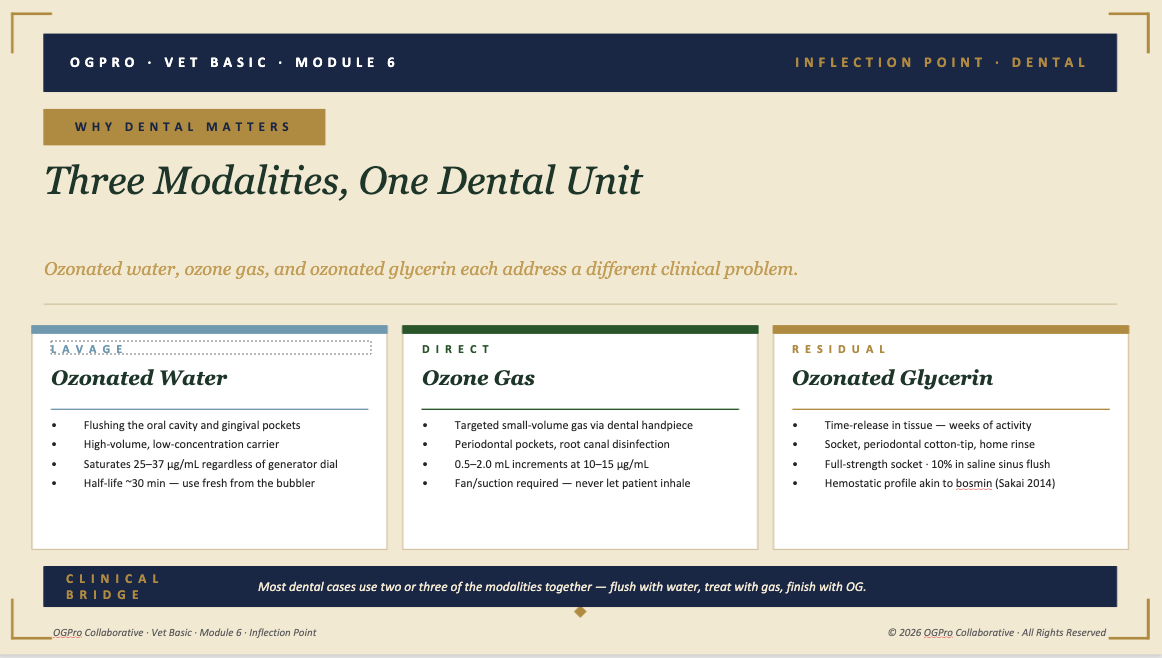
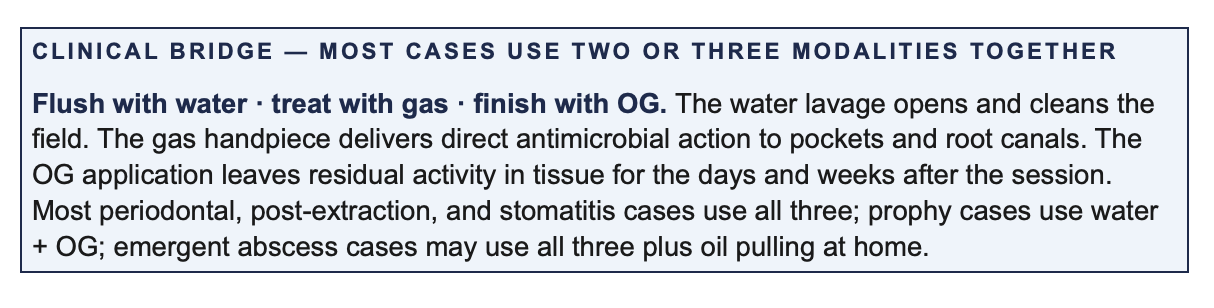
Dental practice is the clinical area where three ozone modalities — water, gas, and OG — converge into one workflow most reliably. Each modality addresses a different clinical problem; together they cover the dental case from arrival to discharge.
Lavage — Ozonated Water
Flushing the oral cavity and gingival pockets.
High-volume, low-concentration carrier.
Saturates at 25–37 µg/mL regardless of generator dial setting.
Half-life approximately 30 minutes — use fresh from the bubbler.
Direct — Ozone Gas
Targeted small-volume gas via dental handpiece.
Periodontal pockets, root canal disinfection.
0.5–2.0 mL increments at 10–15 µg/mL per site.
Fan or suction required at all times — never let the patient inhale ambient gas.
Residual — Ozonated Glycerin
Time-release in tissue — weeks of activity per application.
Socket infusion, periodontal cotton-tip application, home rinse.
Full-strength for socket and home rinse; 10% in saline for sinus flush.
Hemostatic profile comparable to bosmin / adrenaline (Sakai 2014).
Module Overview
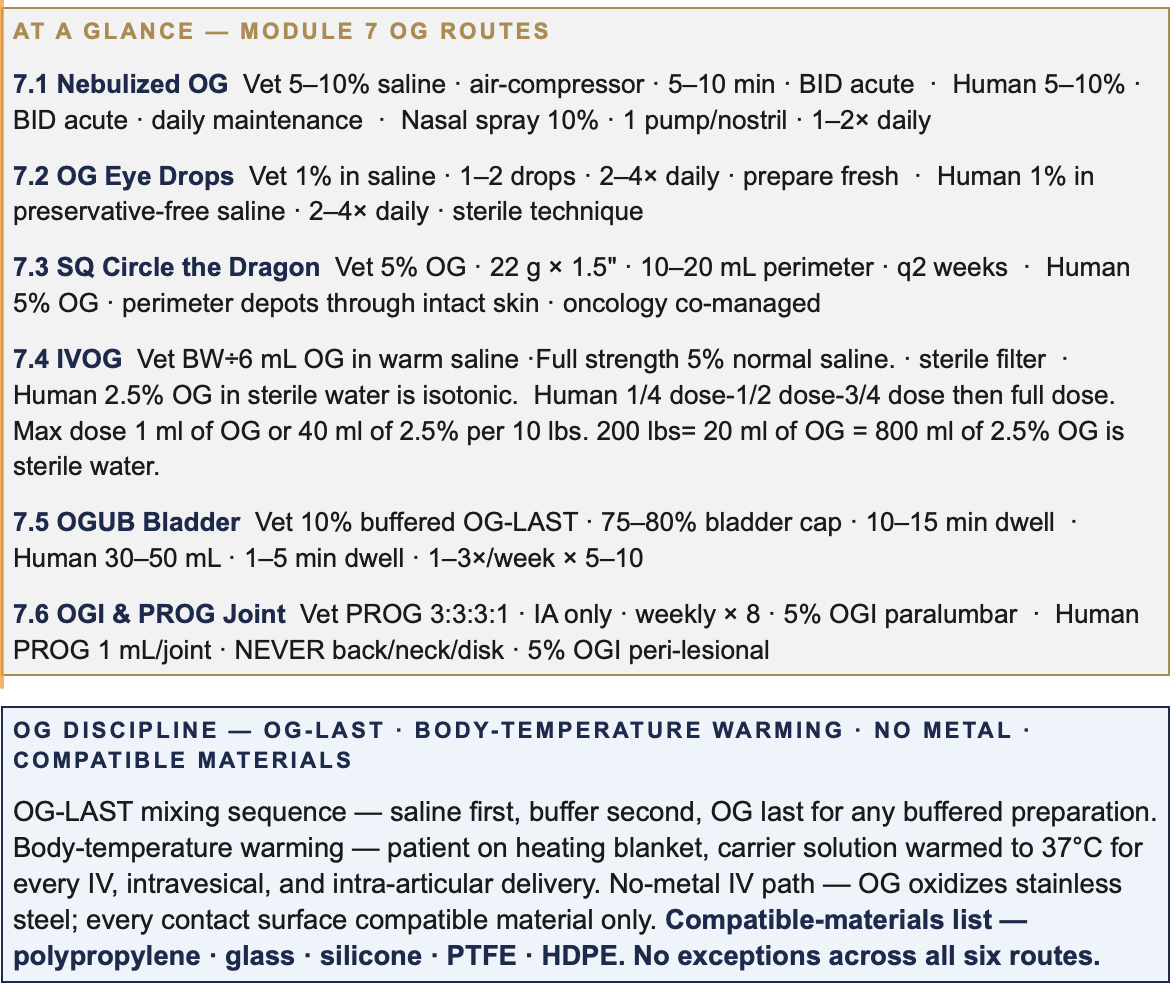
Module 7 is the OG-routes module of the Ozone Basic course. Where Module 6 deployed ozonated glycerin in the dental operatory across four applications (socket, sinus, periodontal, home rinse), Module 7 takes the same stable trioxepane molecule into six additional clinical routes: nebulized respiratory delivery (NOG), ophthalmic application (eye drops), subcutaneous peri-tumoral infiltration (Circle the Dragon), intravenous infusion (IVOG), intravesical bladder infusion (OGUB), and intra-articular joint injection (PROG). Each route follows the same 12-step protocol framework that has anchored every clinical module in this course; each route has its own equipment, dosing, and discipline requirements.
The chemistry of OG was introduced in Module 1 — a stable trioxepane molecule with extended duration of action in tissue, sourced as a 10,000 ppm full-strength preparation from a reputable supplier (Mediplus Pharma, per the Dr. Gotaro Shiota chemistry of record). The Module 6 dental applications used full-strength OG (socket, periodontal, home rinse) and 10% in saline (sinus). Module 7 expands the dilution range: 5% in saline for Circle the Dragon, OGI, and IVOG (BW÷6 escalation); 10% in saline for OGUB (with the OG-LAST mixing sequence); 1% in sterile saline for eye drops (the mucosa-sensitivity rule). The dilution choice is route-specific and gated by tissue tolerance.
Six lessons follow. Lesson 7.1 — Nebulized OG (NOG) & Nasal Spray — covers the respiratory route at 5–10% OG in saline through an air-compressor nebulizer. Lesson 7.2 — OG Eye Drops — covers the ophthalmic route at 1% OG in sterile saline, with the mucosa-sensitivity rule that no higher concentration is acceptable on the eye. Lesson 7.3 — SQ Circle the Dragon — covers the peri-tumoral subcutaneous infiltration at 5% OG with the never-intralesional rule. Lesson 7.4 — IVOG — covers the intravenous infusion with the no-metal IV path discipline. Lesson 7.5 — OGUB — covers the intravesical bladder infusion at 10% buffered OG via the OG-LAST mixing sequence. Lesson 7.6 — OGI & PROG Joint — covers local infiltration (OGI) and intra-articular injection (PROG) using the 3:3:3:1 stock for joint indications.
The six lessons
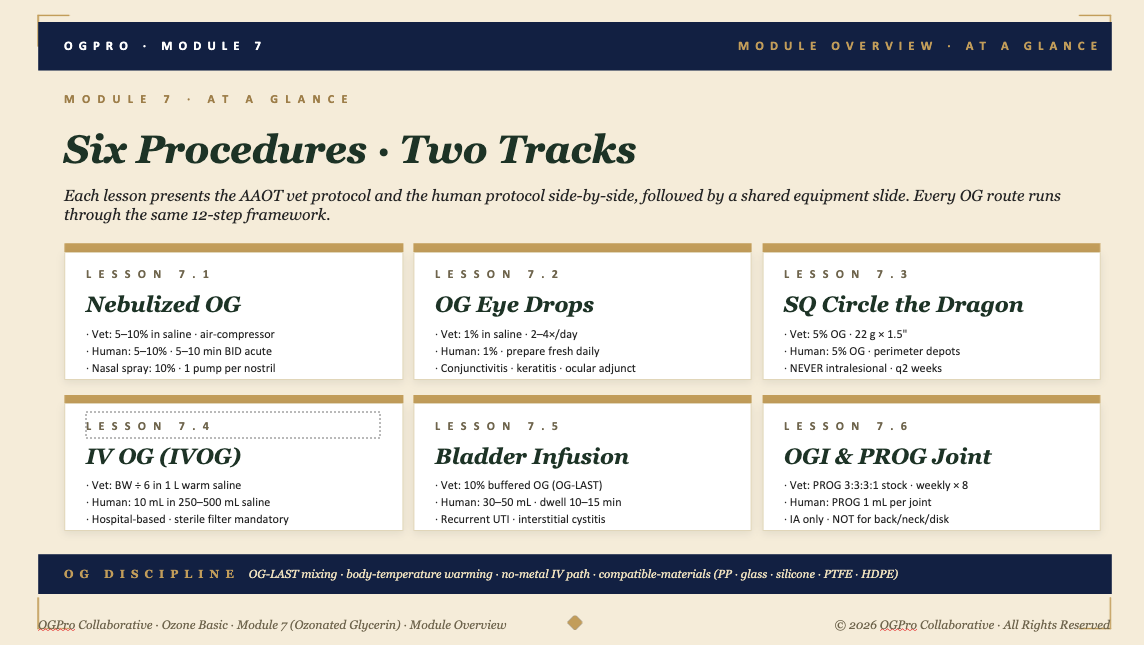
Lesson 7.1 — Nebulized OG (NOG) & Nasal Spray. 5–10% OG in saline · air-compressor nebulizer · 5–10 minute sessions · vet BID acute, 1×/day maintenance; human BID acute, 1×/day chronic. Nasal spray 10% OG, 1 pump per nostril, 1–2× daily for sinus indications.
Lesson 7.2 — OG Eye Drops. 1% OG in sterile saline · 1–2 drops per affected eye · 2–4× daily acute, taper with response. Prepared fresh, discarded at end of patient visit. Mucosa is sensitive — 1% only, never higher.
Lesson 7.3 — SQ Circle the Dragon. 5% OG in 0.9% saline · 22 g × 1.5" needle · 10–20 mL per session split across perimeter depots · injected through intact skin around soft-tissue masses. NEVER intralesional. q2 weeks until resolution.
Lesson 7.4 — IVOG (Intravenous OG). Vet: BW (kg) ÷ 6 = mL OG in warm saline · 5% OG in NS or LRS plus bicarbonate. Humans are sensitive: 2.5% OG in sterile water is isotonic. Escalating dose as some humans are more sesitive than others. To prevent any safety issues like hematuria and osmotic diarrhea. Max dose of 1 ml of OG or 50 ml of 2.5% per 10 lbs. 200 lb+ 20 ml ofOG + 800 ml of 2.5% OG is Sterile Water.
Lesson 7.5 — OGUB (Intravesical OG). 10% buffered OG (OG-LAST sequence) · catheter dwell 10–15 min vet, 1–5 min human · drain · vet 75–80% bladder capacity or 1–2 mL/lb; human 30–50 mL starting 10 mL. Recurrent UTI, interstitial cystitis, bladder oncology adjunct.
Lesson 7.6 — OGI & PROG Joint. PROG (Prolozone-OG) 3:3:3:1 stock (3 OG : 3 Lidocaine/Procaine 2% : 3 B₁₂ : 1 NaHCO₃) = 10 joints @ 1 mL · IA ONLY · weekly × 8 visits · assess week 12. OGI 5% OG paralumbar/peri-lesional through intact skin. PROG is NEVER for back, neck, or disk indications.
Learning objectives
By the end of this module, the practitioner will be able to:
Select the appropriate OG route (nebulized, ophthalmic, peri-tumoral SQ, IV, intravesical, intra-articular) for a given clinical indication in both veterinary and human contexts.
Prepare OG dilutions correctly — 1% for eye drops, 5% for Circle the Dragon and OGI, 5–10% for nebulizing, 10% buffered for OGUB, and the BW÷6 saline-scaled preparation for IVOG.
Execute the OG-LAST mixing sequence and the no-metal IV path discipline that protect the trioxepane payload through to administration.
Execute Circle the Dragon perimeter infiltration through intact skin only — recognizing the never-intralesional rule as a patient-safety boundary.
Prepare the PROG 3:3:3:1 stock and recognize that PROG is intra-articular only — back, neck, and disk indications use the OGI family at 5%, not PROG.
Set up the hospital-grade IVOG path with warmed carrier, sterile blood filter, compatible-materials infusion set, and post-infusion observation.
Document and follow up appropriately, including coordination with oncology, urology, and orthopedics for the specialty-coordinated routes.
Submit clinical experience back to the OGPro Practice Database — particularly Circle the Dragon and PROG joint outcomes, which are the highest-value reporting areas